New website for Oak Street liquor & deli

The image shows visual highlights of the website that we created

Oak Street Liquor and Deli is a locally owned neighborhood shop that serves hot meals, alcoholic beverages, and select, high-end groceries. When they lost access to their website during a management change, they lost a key channel for sharing weekly menu changes and staying visible to customers online. My partner and I stepped in to design and develop a new website for them that would not only restore their digital presence, but create opportunities for growth.
Overview

Problem

Oak Street Deli had been without a digital presence for almost a year, and sales were impacted as a result. As the previous website was both inaccessible and offline, my partner and I were brought in on a one-week deadline to get an entirely new site up and running. This not only involved rapid development work, but also aligning the design with the stakeholder’s vision and level setting expectations based on resource constraints. In order to meet the stakeholder’s functionality requests by the deadline, we opted to use the Elementor application on Wordpress.

My Role

UX Designer & No-code Web Developer

Year

2025

Team

Deli Owner, Engineer

Tools

Figma, Wordpress, Elementor, Google Docs, Google Drive

Solution

Oak Street Deli lost access to their domain and website during a management change, but after securing a new domain, we designed and built a website using WordPress and Elementor, with a focus on simplicity and ease of maintenance.

Our priorities were to make the menu easy to find and update, to add contact information, and to ensure that the owner could manage the site independently, especially when it came to posting the weekly specials.

research & Strategy

Kickoff Meeting & Requirement Gathering

We met with the owner to align on business goals, gather branding and content information, and discuss the previous website, WordPress access, and the lost domain. We also focused on understanding the core features the owner wanted: an easy-to-update menu and a simple-to-manage site. 

Competitive Analysis

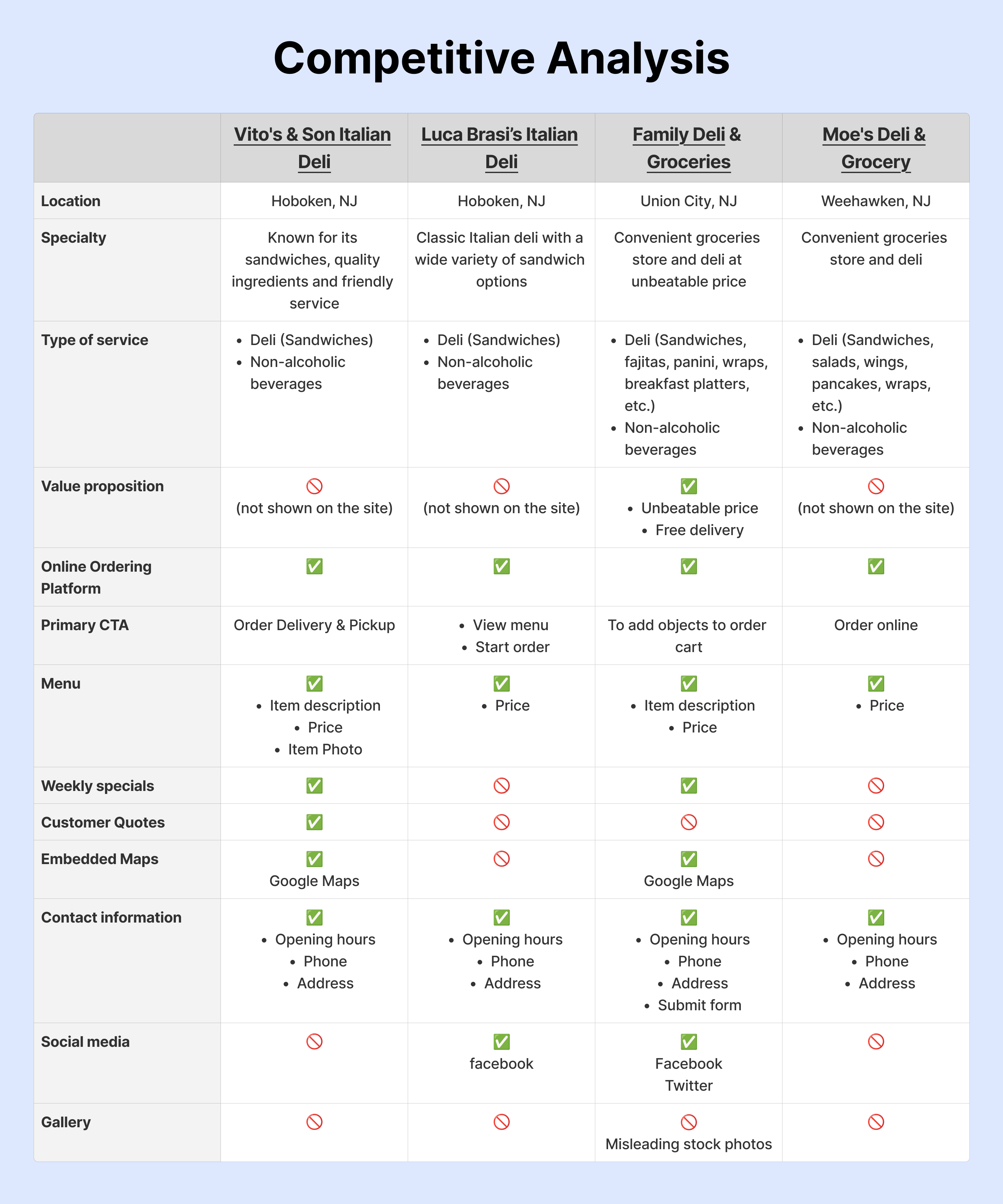
We reviewed local competitors' websites to identify design patterns and functional features that set industry standards. This included evaluating how similar restaurant and produce stores displayed menus, handled online orders, and presented contact information. The insights from this research helped shape a design that was both competitive and tailored to the deli’s needs.

New Domain & Site Implementation Strategy

After securing a new domain, we outlined a strategy for implementing the site on WordPress. This involved setting up hosting and configuring the WordPress environment.

design

Site Structure

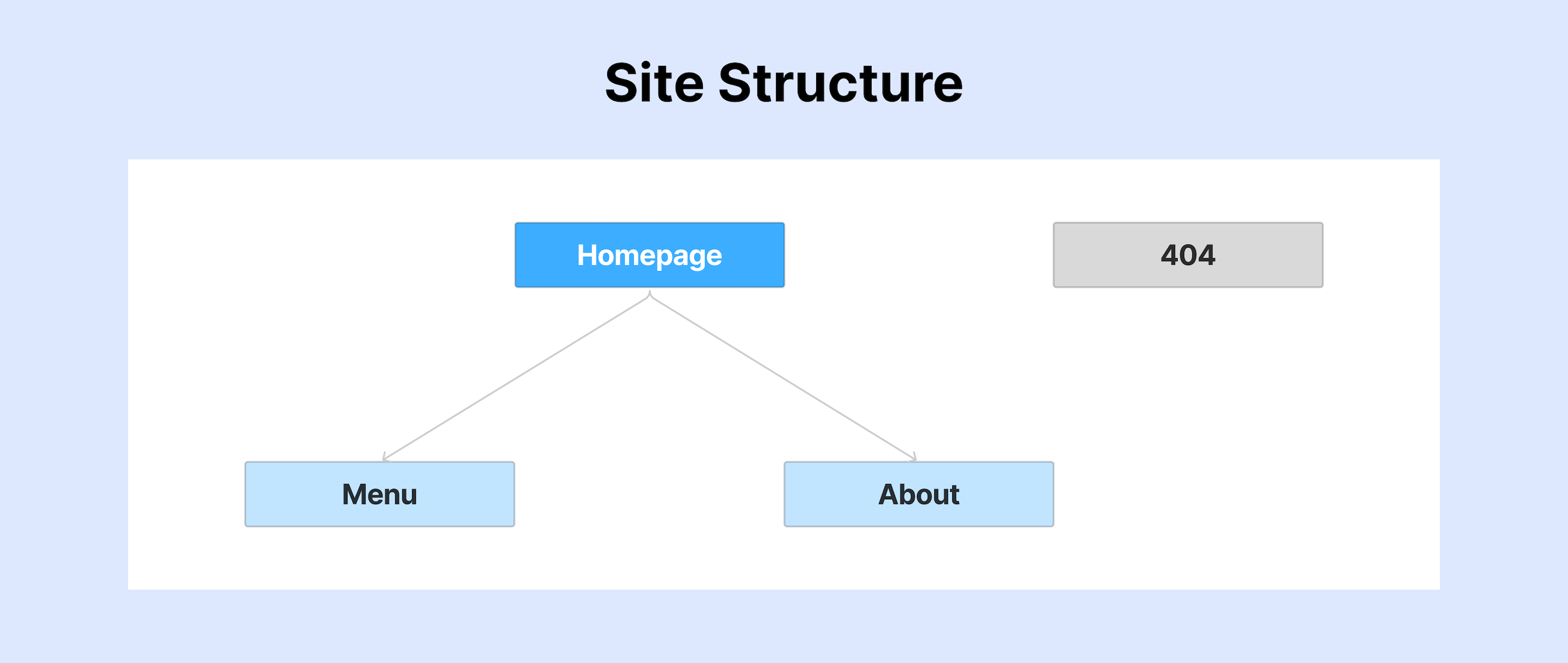
We started by outlining a site map focused on clarity and ease of use. The structure included a homepage, an about page, a dedicated menu page, and a 404 page. Each page had a clear purpose and tied back to the deli’s core goal: making it easy for customers to find the menu and get in touch quickly.

A website structure consisting of the home page, then menu and about pages, and 404 page.

Wireframes

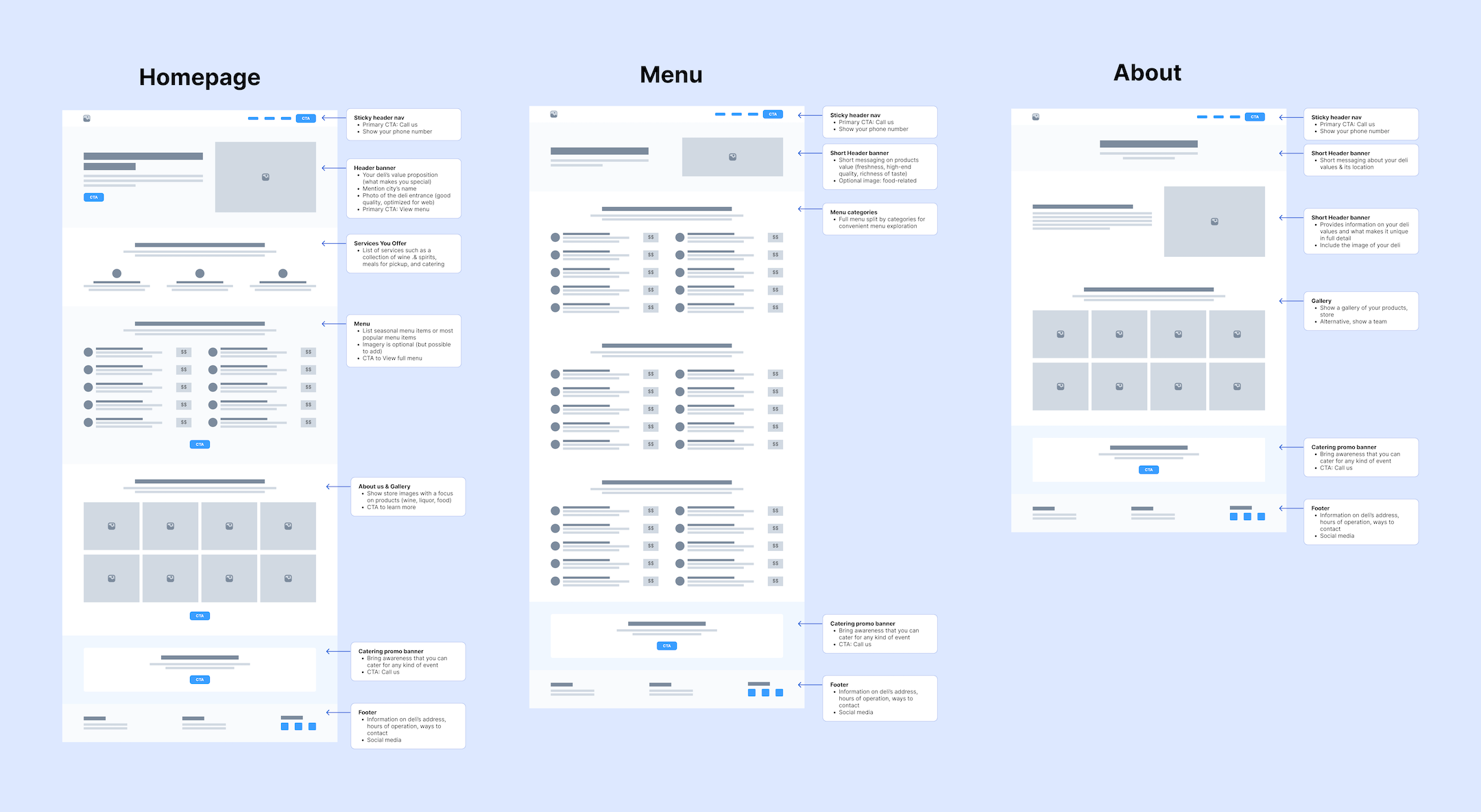
I created low-fidelity wireframes to map out key content areas and layouts. This helped align with the owner on what the site would include and how it would work.

  • The homepage led with the deli’s value proposition and a direct call-to-action to view the weekly menu or call the store.
  • A persistent banner promoted their catering services—an opportunity the previous site had missed.
  • The layout emphasized simplicity, quick access to information, and ease of updates for the deli owner.

Design

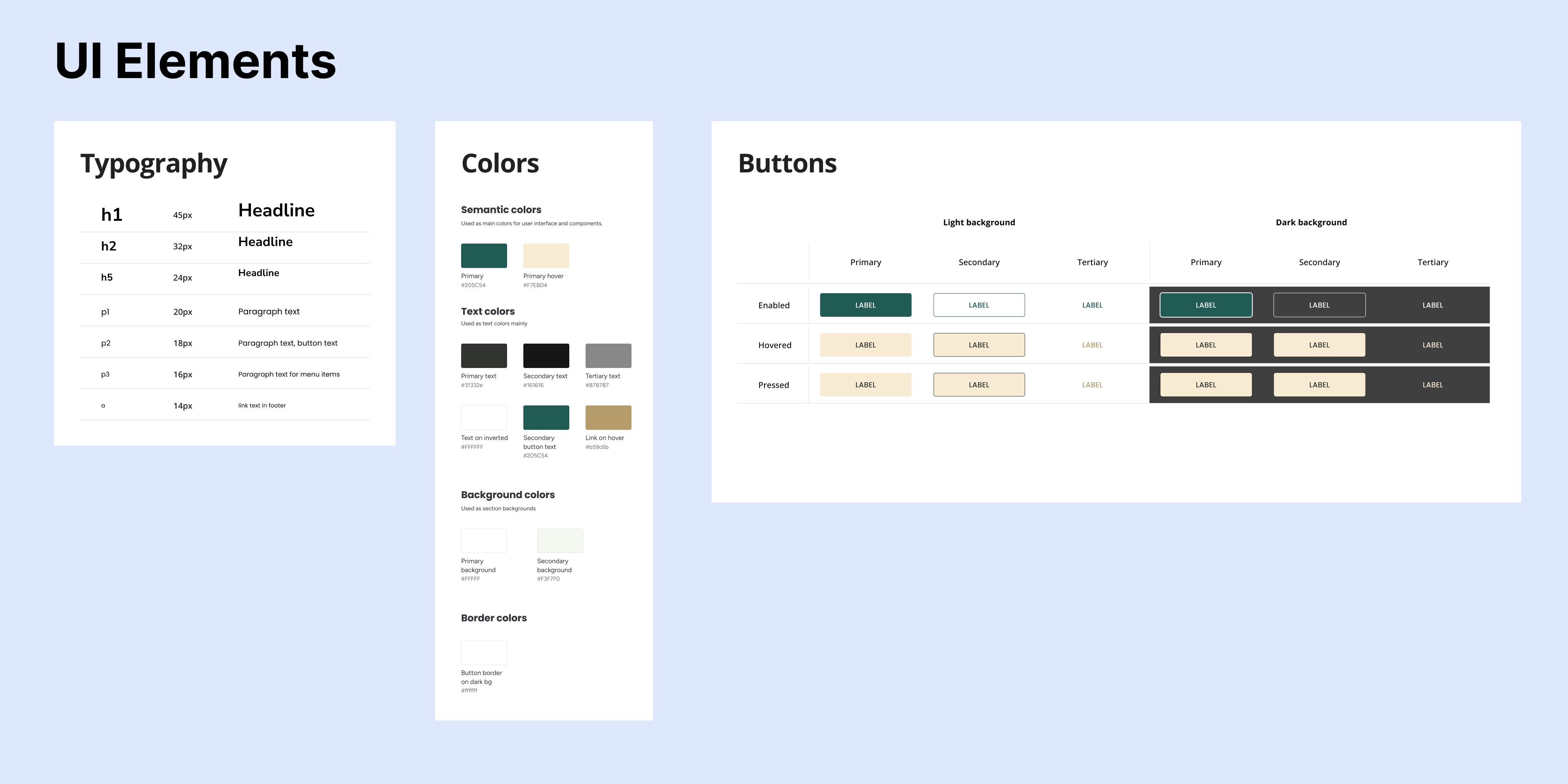
I didn’t go deep into visual design for this project. Instead, I documented a few basic UI elements like colors, fonts, and button styles, based on the deli’s branding and the look and feel of the physical store. The goal was to keep things consistent and familiar for regular customers. From there, we used Elementor to structure and build out the pages, focusing on clarity and mobile-friendliness.

This shows UI elements that were created for the website redesign in order to establish a systematic approach and standardize elements

Implementation

After finalizing the UI kit, we proceeded to implement the core pages of the website. We implemented four pages - homepage, about, menu, and 404. 

  • Homepage – A page featuring the deli's value proposition, call-to-action buttons, weekly specials menu, and catering banner.
  • About – A page introducing the business and its mission, showing a gallery of photos.
  • Menu – A page for customers to view the full menu.
  • 404 - A standard page if users lands on a non-existing URL.

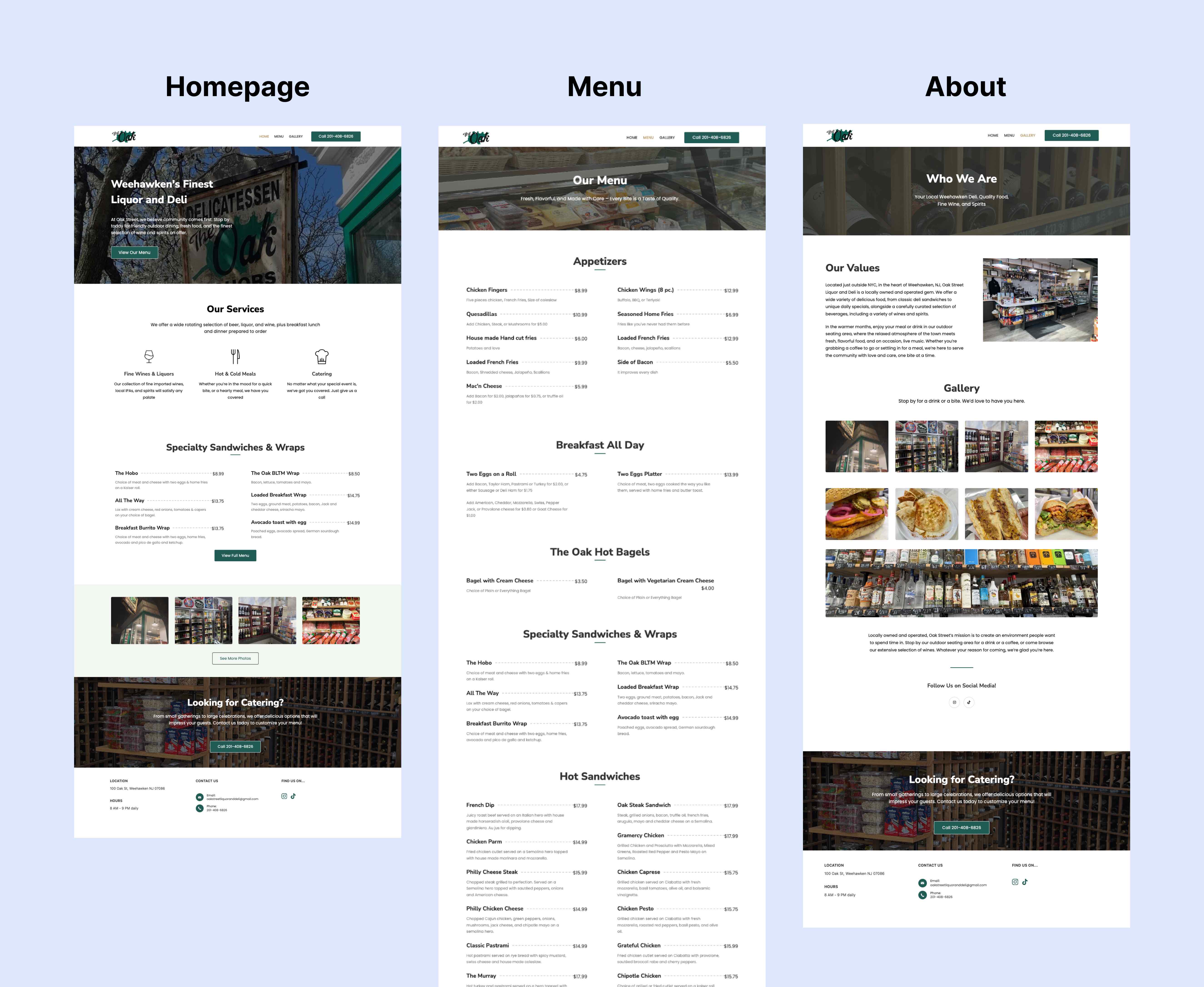
The screenshot below shows the three core pages that were implemented: 

This image shows the mockups of the webpages: homepage, about, and menu
Results & Evaluation

Results

The new website helped the deli reestablish their digital presence and start connecting with customers online again. A few early wins:

$2,160+ Annual Savings

By moving the menu and weekly specials online, the owner no longer needed to print menu brochures at $360 per batch.

Increased Customer Engagement

The website led to a noticeable uptick in customer inquiries and orders, as reported by the owner and his staff.​

Increased Catering Inquiries

Within the first month, the deli received 3 new catering inquiries through phone calls attributed to the site’s banner. 

Next steps

The deli now has a fully functional website that meets their core needs, but there are opportunities for future improvements:

Lessons Learned

The experience taught us a few practical lessons we’ll carry into future projects:

Keep It Simple

A straightforward structure, simple navigation, and easy-to-update content were exactly what this small business needed.

Communication Matters

Regular check-ins with the owner helped us stay aligned and avoid misunderstandings.

Wireframes Save Time

Getting early buy-in on layout through wireframes helped prevent rework and made development smoother.

Don’t Be Afraid to Try New Tools

We had never used Elementor before, but leaning into it allowed us to build faster and smarter. Instead of starting from scratch, we focused on learning just enough to deliver a clean, functional site within days.